Brand platform, architecture, & identity development

THE CHALLENGE: FRACTURED FOUNDATIONS
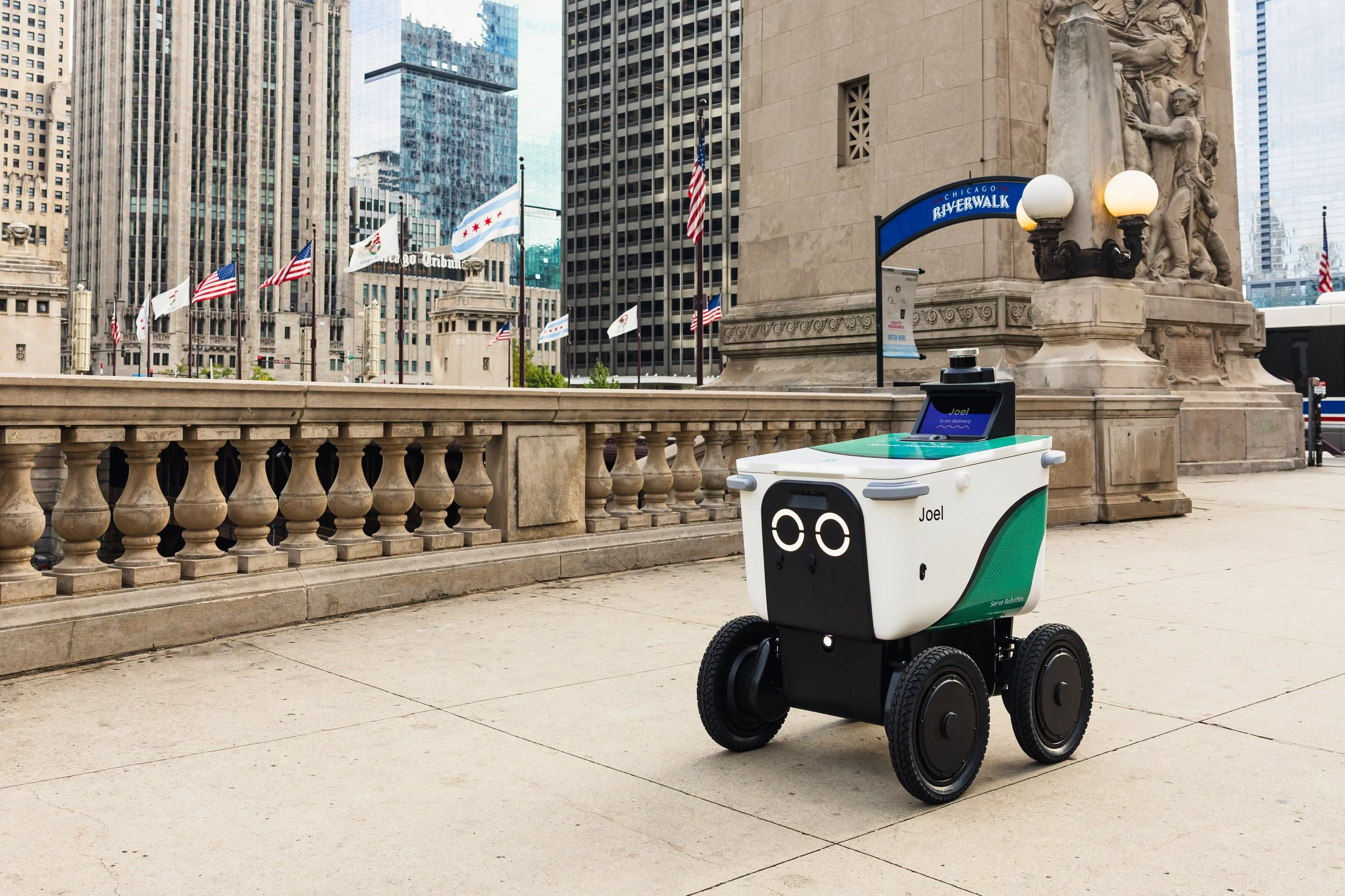
2025 was a banner year for Serve Robotics (Nasdaq: SERV). They acquired four companies to accelerate their strategic flywheel, and deployed 2,000 sidewalk robots by year-end, making them the largest fleet of autonomous sidewalk delivery robots in the country.
But that rapid growth, all those strategic acquisitions consequently bringing five distinct brands together under one umbrella, coupled with several city expansions, was outgrowing the thoughtful foundations the team had laid, and slowing down their production pipeline. Their accelerating business needed a stable, scalable brand platform to stand on.
THE BRIEF: REIMAGINE THE BRAND PLATFORM
We needed to reconstruct the comprehensive brand platform — a scalable foundation to help Serve show up in the communities it serves with strength, empathy, and conviction. It should have style, and be seismically retrofitted to withstand whatever comes next.
I also needed to propose a brand architecture to incorporate and reconcile the portfolio brands into the core brand. And consequently, we needed to evolve the brand identity with a fresh tone, voice, and messaging guide to reflect the platform.
THE SOLUTION: LEVERAGE THE SOUL, RETROFIT FOR THE FUTURE
Serve already had a cherished brand — the endearing industrial design of the robots and the brand personality were universally valued, so we didn’t want to start from scratch. We wanted to build upon what was already successful, considerately incorporate the acquired brands into the mix, and evolve the foundation to serve the current and future state of the business.
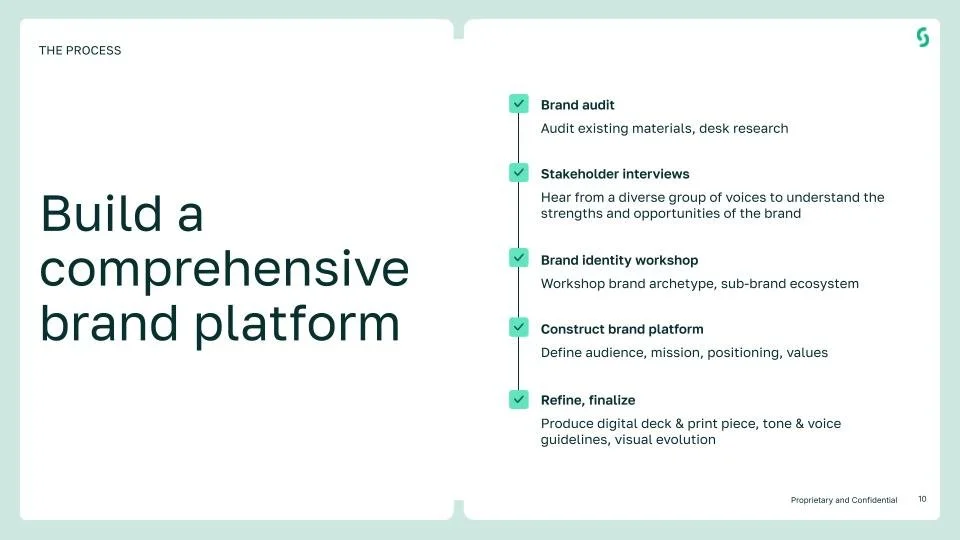
We broke the project into five phases:
Audit and diagnose the current brand, as well as the newly acquired portfolio brands.
Interview key executives and business stakeholders to understand the cherished aspects, the nuisances, and any sacred cows.
Workshop the brand with the extended team to get the wheels turning and uncover our creative territory.
Construct a full brand platform, soup to nuts, including envisioning a brand architecture for the sub-brand ecosystem and a tone, voice, and messaging guide for the new brand identity.
Refine, roadshow, and finalize the platform, taking in feedback from key stakeholders to get it to its final form.
Phase one: Audit
We first went deep into the existing brand, doing thorough desk research on Serve and its four newly acquired brands — Diligent Robotics (healthcare robots), Vebu (automated kitchen solutions), Voysys (robotic connectivity), and Vayu (data modeling). I got to know each of the brands, each of which were at varying levels of maturity. Some were consumer-facing, others not. Some had existing brand guidelines, others not. The deliverable was an extensive diagnostic report identifying areas of strength and opportunity to focus on.
Phase two: Interview
The desk research was then supplemented by stakeholder interviews. I interviewed 12 key executive and upper management stakeholders, leveraging a consistent set of questions to create a consistent data set of thoughts. We created a safe space for people to share their open and honest thoughts, so we could get to the heart of the good, the bad, and the ugly.
Phase three: Workshop
I then hosted a half-day workshop, with content and exercises focused on teasing out the brand purpose, enemy, and archetype, as well as a preliminary discussion on how to elegantly organize the portfolio brands into a single primary brand. The workshop was dynamic, fun, revealing, and elicited some really nice feedback, with one participant saying it was “the most fun 3.5-hour meeting of my career!”
Phase four: Development
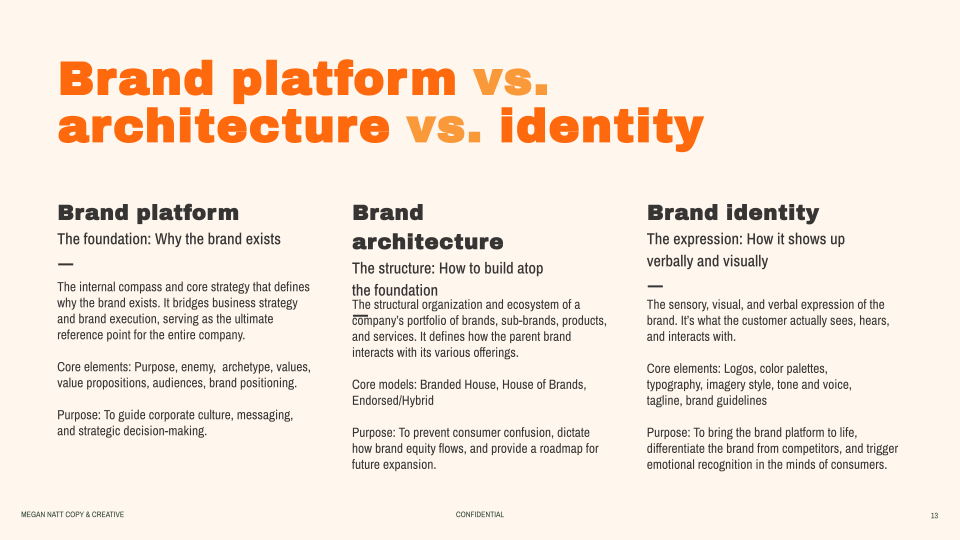
There are three big pieces of branding: the brand platform, the brand architecture, and the brand identity. All three were scoped for this project, first tackling the platform and architecture, then evolving the brand identity to align with the new platform and the evolving architecture.
Brand platform
Taking all the inputs from the audit, the interviews, and the workshop, I got to work on concatenating, articulating, and iterating on a brand platform.
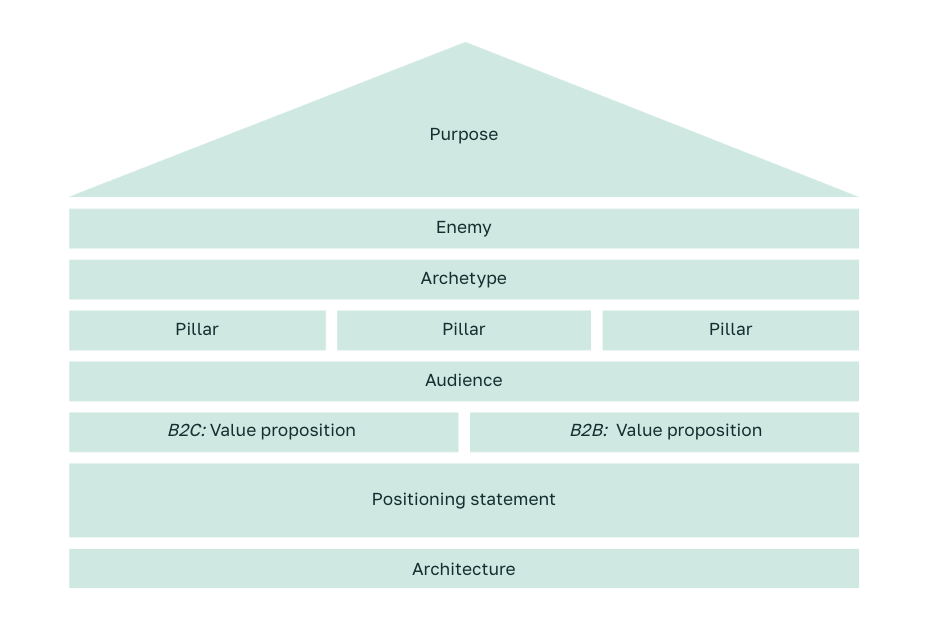
A brand platform, sometimes called a “brand house”, is a foundational set of assets and documentation that define the brand’s identity and can help inform corporate and creative decisions.
Key components of a brand platform
-
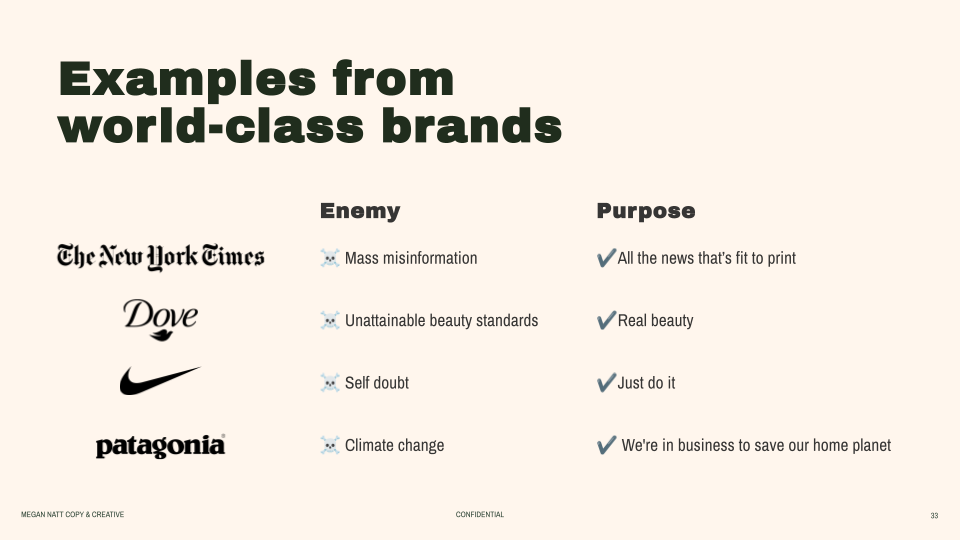
Sometimes billed as the mission statement, the purpose is the company’s why, the reason for its existence. Having a clear, existential purpose, oriented towards vanquishing the enemy and achieving some higher vision, acts as a tether for business and brand decisions. It’s a big, grand, aspirational vision balanced with specificity — it should be unique, ownable, and achievable.
-
The “enemy” is the thing your brand seeks to oppose, philosophically. Adversaries dramatize any good story. A good vs. evil paradigm helps reveal what we want to stand against, and consequently, what we stand for. It helps us understand why the business exists (beyond turning a profit).
-
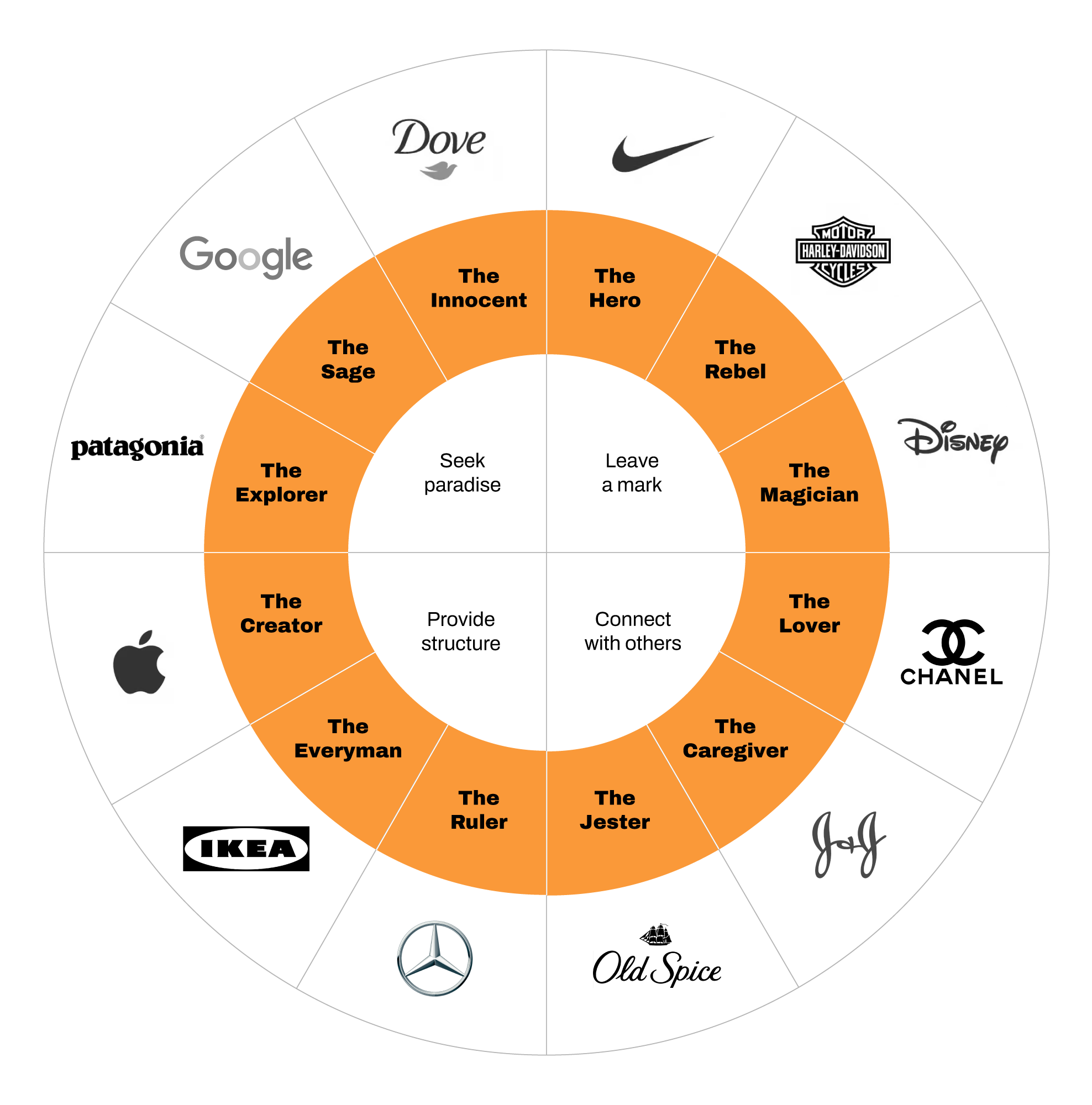
The concept of a brand archetype springs from psychiatrist Carl Jung’s philosophy that there are 12 archetype paradigms that underpin people’s personas. These personas are deep and inherited, not learned through the surrounding environment. The goal of identifying an archetype for a brand is to uncover its fundamental persona, and construct a personality using these elemental character traits.
-
Alternatively billed as “brand values”, the brand pillars are the uniting principles that underpin and define the brand’s personality and act as filters for corporate and creative decision-making. They’re core inputs for constructing and guiding the brand identity (visual and verbal expressions).
-
Who are we talking to, when? Many brands have multiple constituents, each of whom require different messages and tones to resonate most impactfully. Serve had always considered themselves B2B, but in this process of self discovery, we decided it had two sides — one business side for enterprise customers, industry thought leaders, and investors, and an important consumer side for the general public (people encountering robots in the wild) and policymakers advocating for their community's interests.
-
Defining, articulating, and propagating the same value propositions and key benefits consistently help with messaging pull-through, and consequently, brand strength. We want to articulate all the benefits of the business’ products and services, keeping them trim and focused so the brand doesn't seem scattershot or opportunistic. In Serve’s case, because they had both B2B and B2C audiences, we developed discrete value propositions to align with each audience’s sensibilities.
-
A clear, simple statement to clearly define the who, what, where, and why, with a little style and pizazz for good measure. While not often public-facing, it acts as a quick, easy orientation for defining the business and what it brings to society.
Brand architecture
In parallel with the brand platform development, we also iterated on the brand architecture. To harmonize the portfolio brands with the main Serve brand, I outlined the options (branded house, house of brands, hybrid solution) with examples from best-in-class brands, and proposed a corporate structure to suit Serve’s specific situation. The architecture solution got sold through with very little pushback from the executive team.
Brand identity
Once we finalized the platform and the architecture, I leveraged the platform assets to craft a tone, voice, and messaging guide. It included:
Voice style guide
Editorial style guide
A basic lexicon
Do’s and don’ts for each audience segment
Refreshed corporate boilerplates — a single sentence, a short version, and longer version
It’s an excellent tool to enable various teams to show up consistently in the world — whether in a press release, marketing communications, sales pitches, trade shows, or in the communities where the robots operate.
Phase 5: Refine, roadshow, finalize
After some sessions with key executives to refine, tweak, and refine some more, we finalized the platform and roadshowed it with the team. It was well received, and the whole team was energized and eager to leverage platform, architecture, and identity as fundamental building blocks for their work, whether in earnings calls, policymaking, UX design, or marketing.